If you’re pregnant and planning to have a caesarean birth, you might be wondering what to expect at Darent Valley Hospital and how you can prepare for the day. Whether you’ve been advised to have a planned caesarean for medical reasons, have had a previous caesarean and are planning another, or have decided that an elective caesarean is the right choice for you, it’s worth knowing what the process involves.
A planned caesarean doesn’t mean you can’t have choices about your birth experience. There are still lots of ways you can be involved in your baby’s birth, make decisions about your care and create an experience that feels right for you.
In this guide, I’ll explain what you need to know about planning an elective caesarean at Darent Valley Hospital, including how to arrange one, what happens on the day, what choices you have and how to prepare for your baby’s arrival.
What is an elective caesarean?
An elective caesarean, also known as a planned caesarean, is when your baby is delivered through an operation rather than vaginally, with the birth arranged in advance.
There are lots of reasons why someone might plan a caesarean birth. These can include:
You have a low-lying placenta.
There are medical reasons why a vaginal birth may not be recommended.
You’ve previously had a caesarean and would prefer to have another.
You’ve experienced a previous difficult or traumatic birth.
You have anxiety about vaginal birth or have considered your options and decided that a caesarean is right for you.
Some caesareans are recommended by an obstetrician, while others are requested by the person giving birth. If you’re considering an elective caesarean, it’s worth discussing this with your midwife or obstetrician as early as possible so that you have time to explore your options and make an informed decision.
Can I choose to have an elective caesarean at Darent Valley?
Yes. You can request a planned caesarean even if there isn’t a medical reason why you would need one. If you’re considering a caesarean by choice, your maternity team should discuss the benefits and risks of the different birth options with you, as well as any concerns or anxieties you might have.
If, after discussing your options, you decide that a planned caesarean is the right choice for you, your decision should be supported.
You don’t need to feel that you have to justify your birth preferences to anyone. It’s important that you feel listened to and involved in decisions about how your baby is born.
When will my elective caesarean be booked?
Planned caesareans are usually scheduled from 39 weeks of pregnancy, unless there is a medical reason why your baby needs to be delivered earlier. Your obstetrician will discuss the timing of your caesarean with you and arrange a date.
It’s worth remembering that planned caesareans can sometimes be postponed if the hospital needs to prioritise emergency deliveries. If this happens, the maternity team should explain your options and arrange another date as soon as possible.
If you’re particularly anxious about your planned date changing, it’s worth discussing this with your midwife or obstetrician beforehand.
What happens before my elective caesarean at Darent Valley?
Darent Valley has a dedicated elective caesarean team, led by Sandra Matthews, the lead midwife for elective caesarean sections.
The hospital follows an Enhanced Recovery Obstetric Programme (EROP), which aims to help you recover more quickly following surgery, reduce complications and support an earlier return to normal activities. Before your caesarean, you’ll have blood samples taken in the antenatal clinic.
The hospital recommends looking after yourself in the run-up to your operation by:
Eating a balanced diet.
Including carbohydrates to give you energy.
Eating plenty of fruit and vegetables.
Keeping well hydrated.
You’ll also receive information about preparing for your operation, including when to stop eating and drinking.
What happens the day before my planned caesarean?
Darent Valley will phone you the day before your planned caesarean to confirm what time you need to arrive at the hospital. The call will come from a withheld number.
The hospital currently provides the following guidance:
If your caesarean is booked for the morning:
You should not eat after midnight.
If your caesarean is booked for the afternoon:
You’ll be advised to have a high-carbohydrate breakfast.
You’ll then need to fast from 6am.
The hospital also encourages you to have a non-fizzy drink approximately two hours before your operation.
You’ll be advised of the specific instructions for your operation, so always follow the guidance given to you by your maternity team, particularly if you have diabetes or other medical conditions. The evening before your caesarean, try to get a good night’s sleep and have everything ready for your hospital stay.
What happens when I arrive at Darent Valley for my caesarean?
When you arrive at hospital, you’ll meet the team who will be looking after you during your operation. You’ll be asked to wash without using gels or soaps and avoid applying creams to your skin on the morning of your surgery. You’ll also need to remove jewellery and piercings.
Once you’ve completed the necessary preparations, you and your birth partner will be escorted into theatre. Your anaesthetist will normally give you a spinal anaesthetic. This means you’ll be awake for the birth but won’t feel pain during the operation. You’ll also be given intravenous fluids and antibiotics to help reduce the risk of infection, and a catheter will be inserted into your bladder.
Can my birth partner be with me during my caesarean?
Yes. Darent Valley’s information explains that you and your birth partner will be escorted into theatre together.
Having your birth partner with you can be a really important part of your birth experience. They can support you, help you feel calm and share those first moments with your baby. It’s worth talking to your birth partner beforehand about how you’d like them to support you, whether that’s holding your hand, helping you with your breathing or simply being there beside you.
Can I have a gentle caesarean at Darent Valley?
You might have heard the term ‘gentle caesarean’ or ‘family-centred caesarean’. This generally describes an approach to caesarean birth that aims to make the experience feel more personal and family-focused, rather than purely medical.
Darent Valley specifically lists a number of choices that may be available to you during your planned caesarean.
These include:
Lowering the screen: So you can see your baby as they are born.
A quiet environment: Helping to create a calmer atmosphere in theatre.
Your own music: You’re welcome to bring a small speaker and play music of your choice.
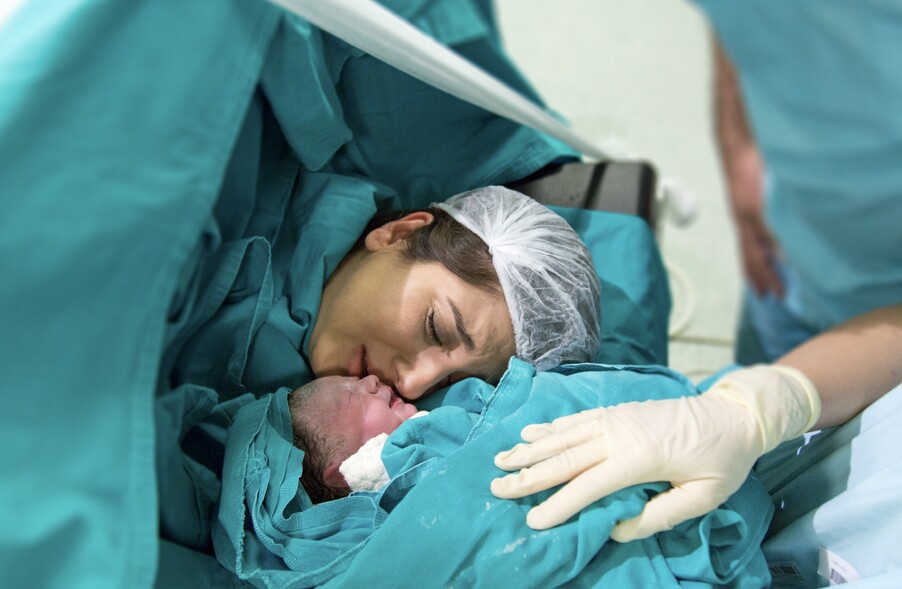
Early skin-to-skin: The team will encourage skin-to-skin contact as soon as physically possible.
Partner involvement: Your birth partner may be able to trim the umbilical cord.
These are lovely options to discuss with your maternity team when planning your caesarean. It’s important to remember that some choices will depend on your individual circumstances and how you and your baby are doing on the day.
what happens during an elective c-section?
During an elective C-section at Darent Valley Hospital, you will be looked after by a multidisciplinary team of midwives, obstetricians, anaesthetists and theatre staff, all working together to support you and your baby.
Your obstetrician will perform the surgery, while your anaesthetist will look after you throughout the operation, monitoring you and making sure you are comfortable. Your midwife will be there to support you, help welcome your baby and facilitate those important first moments together, including skin-to-skin contact where possible.
Once you are in theatre, the operation will usually take around 45 minutes. An incision is made just above your bikini line, through which your baby is gently delivered. In most cases, your baby can then be passed straight to you. Although you will be lying down, your midwife can help facilitate skin-to-skin contact and those precious first cuddles.
Your baby is usually born within the first 5–10 minutes of the operation. The remaining time is spent delivering the placenta and carefully stitching the incision closed.
Can I have skin-to-skin after my caesarean?
Yes. Darent Valley encourages skin-to-skin contact as soon as physically possible.
The hospital explains that, providing all is well, you’ll be encouraged to have skin-to-skin with your baby during the remaining time in theatre following their birth.
If immediate skin-to-skin isn’t possible for medical reasons, you can talk to your maternity team about your preferences and whether your birth partner might be able to have skin-to-skin with your baby instead.
What happens after my elective caesarean?
Following your operation, you’ll be supported by the maternity team as you begin your recovery. Darent Valley follows its Enhanced Recovery Obstetric Programme, which focuses on helping you recover as comfortably and quickly as possible. The programme encourages you to start eating and drinking normally again as soon as possible following surgery.
You’ll also be supported with pain relief and encouraged to begin moving around when it’s appropriate.
A caesarean is major abdominal surgery, so it’s important to give yourself time to recover. You’ll need support at home, particularly during the first few weeks, and should follow the advice given by your maternity team about lifting, driving and returning to everyday activities.
How can I prepare for an elective caesarean?
One of the lovely things about having a planned caesarean is that you have time to think about the experience you’d like to have and prepare for your baby’s arrival.
Some things you might want to consider include:
Discussing your birth preferences with your midwife.
Choosing music to play during your operation.
Thinking about whether you’d like the screen lowered when your baby is born.
Talking to your birth partner about how they can support you.
Discussing skin-to-skin and your preferences for the first few moments after birth.
Preparing your hospital bag.
Arranging support at home for your recovery.
Making sure you have comfortable clothes to wear after your operation.
You might also want to think about how you’d like your first few hours with your baby to look, including feeding, skin-to-skin and having some quiet time together.
In the lead up to birth you might also want to take part in an antenatal course, hypnobirthing class or pregnancy yoga. All of these options can help you to feel informed about your birth preferences. You might want a generic birth prep course or take part in an antenatal course tailored for an elective c-section.
Can I use hypnobirthing for an elective caesarean?
Absolutely! Hypnobirthing isn’t just for people planning a vaginal birth. Many of the techniques can be particularly helpful if you’re planning a caesarean, especially if you’re feeling anxious about the operation or would like to feel calmer and more in control.
You might use:
Breathing techniques to help you stay relaxed.
Guided relaxation and visualisation.
Positive affirmations.
Music to create a calming environment.
Massage or touch from your birth partner.
Techniques to help you manage feelings of anxiety.
Your birth partner can also learn how to support you, help you stay focused and create a calm environment. Learning hypnobirthing doesn’t mean you have to have a particular type of birth. It’s about understanding your options, feeling informed and having tools to help you approach birth with confidence.
What should I put in my elective caesarean birth preferences?
Even though your baby will be born in theatre, you can still have birth preferences! You might want to include:
Whether you’d like the screen lowered so you can see your baby being born.
Your choice of music.
Whether you’d like a quiet environment.
Your preferences for skin-to-skin contact.
Whether you’d like your birth partner to trim the umbilical cord, if possible.
Whether you’d like your baby placed directly on your chest.
Your preferences around feeding your baby.
How you’d like your birth partner to be involved.
Any anxieties or concerns you’d like the team to be aware of.
You can also discuss any previous birth experiences that might affect how you feel about your caesarean.
Remember, your birth preferences are there to help the team understand what matters to you. They can be discussed with your midwife before the day, and you can ask questions about what may or may not be possible.
What if I go into labour before my planned caesarean?
Sometimes babies decide to arrive before their planned birthday! If you go into labour or think your waters have broken before your scheduled caesarean, contact the maternity team at Darent Valley for advice.
They’ll assess your circumstances and discuss the safest way forward, which may involve bringing your caesarean forward. It’s worth talking to your midwife about what to do if this happens so you know who to contact and where to go.
Questions to ask your midwife when planning an elective caesarean
If you’re planning a caesarean at Darent Valley, you might find it helpful to take a few questions to your appointments. For example:
When will my caesarean be booked?
What happens if I go into labour before my planned date?
Can I have my birth partner with me throughout the operation?
Can I choose music to play in theatre?
Can the screen be lowered so I can see my baby being born?
Can I have immediate skin-to-skin contact?
Can my birth partner cut the umbilical cord?
What pain relief will I be offered afterwards?
How long am I likely to stay in hospital?
What support will I need when I get home?
You don’t need to have everything planned from the beginning. Take time to ask questions, understand your options and think about what would help you feel comfortable and supported.
About Bloom & Flow
I’m Colleen, founder of Bloom & Flow in Dartford. I’ve been supporting expectant parents with pregnancy yoga and hypnobirthing since 2016.
I believe every birth deserves to be a positive and supported experience, whatever type of birth you are planning.
My hypnobirthing classes help you understand the physiology of birth, learn practical relaxation and breathing techniques, and prepare your birth partner to support you.
Whether you’re planning a vaginal birth, a VBAC or an elective caesarean, hypnobirthing can help you feel more informed, calm and confident as you prepare to meet your baby.
If you’re expecting a baby and planning to give birth at Darent Valley Hospital, you can find out more about my hypnobirthing classes in Dartford.
positive birth stories from darent valley hospital
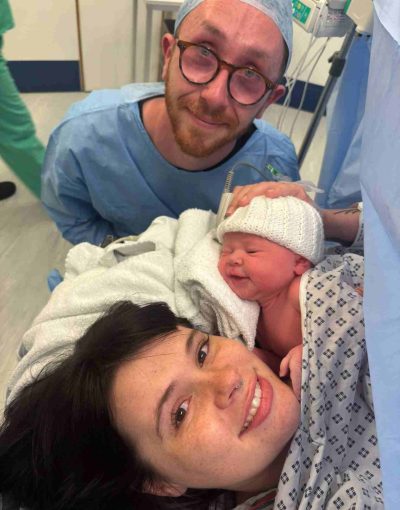
Elective C-Section at Darent Valley Hospital
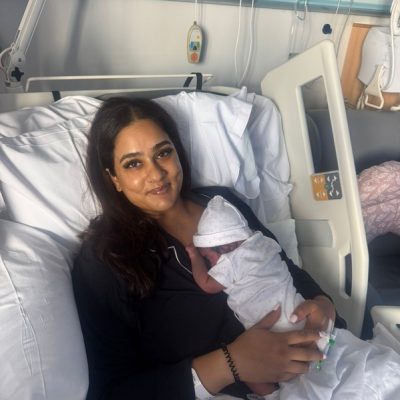
Birth of Mila
Elective C-Section for a big baby

birth of betty
Elective c-section for a breech baby